
Award of Excellence: Democracy without Recognition
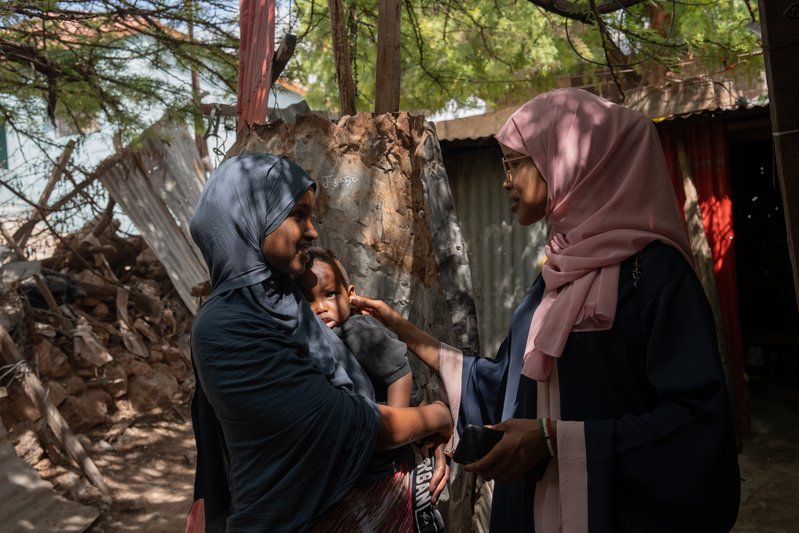
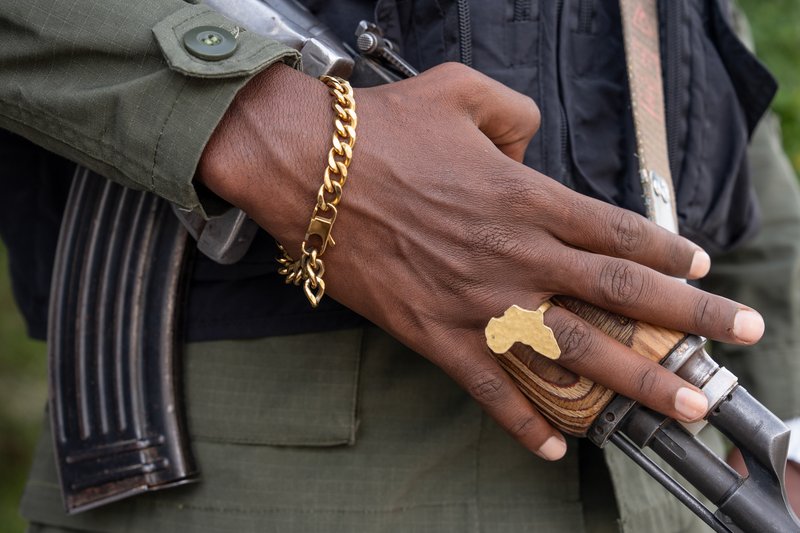
This series explores the resilience of Somaliland's democracy, juxtaposing its populations aspirations for international recognition with the nations de facto statehood.
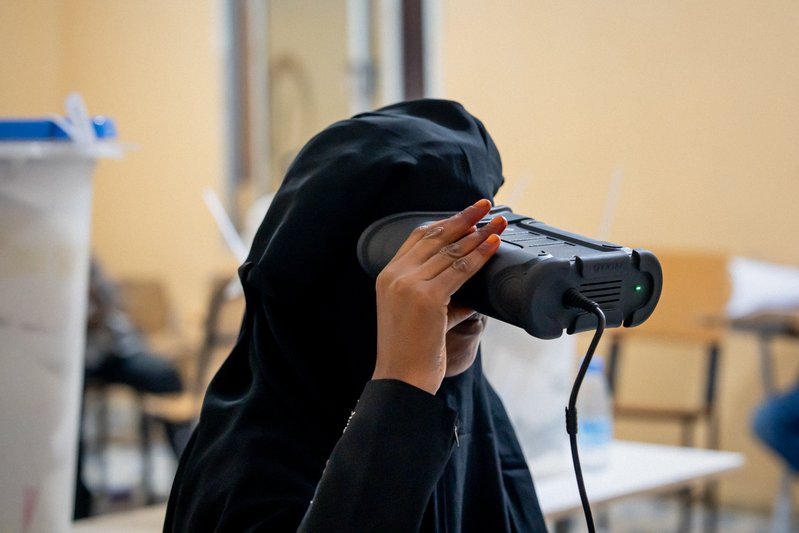
Somaliland declared its independence from Somalia in 1991 and has ever since operated as a de facto state, maintaining a parliamentary democracy as an enclave surrounded by authoritarian neighboring countries. On November 13th 2024, Somaliland held its fourth democratic presidential election, despite political and economic constraints. Opposition leader Abdirahman Mohamed Abdulahi “Cirro” claimed victory with 64% of the vote, marking a pivotal moment in the nation's history.
With a strategic geopolitical location and commitment to democracy, Somaliland challenges us to reconsider the meaning of nationhood. What is democracy when it thrives without recognition? What is sovereignty when it is practiced but not acknowledged? And who gets to decide which states count - and which do not?
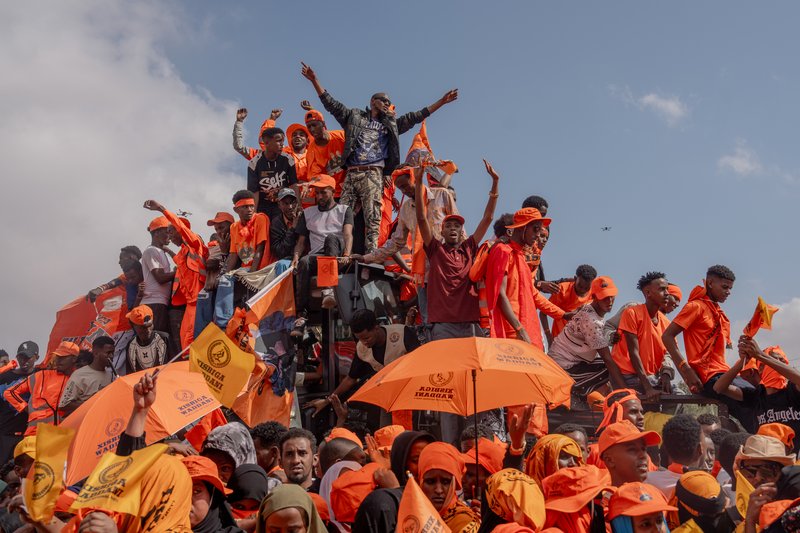
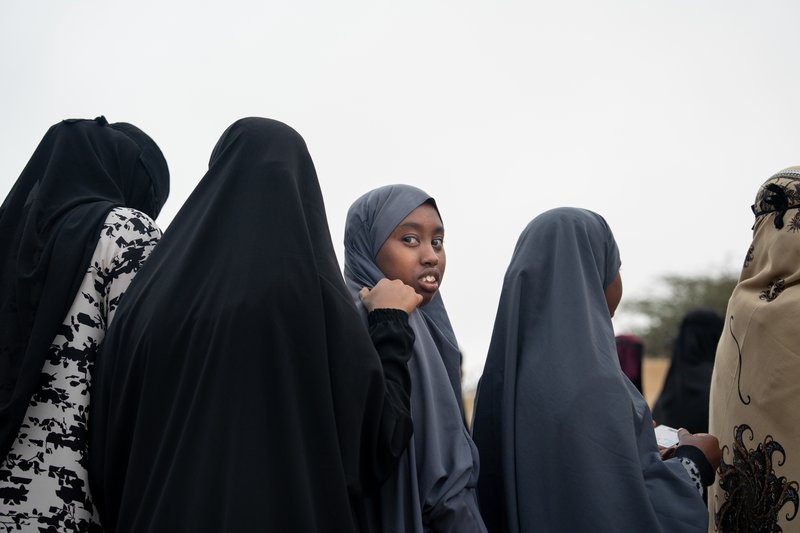
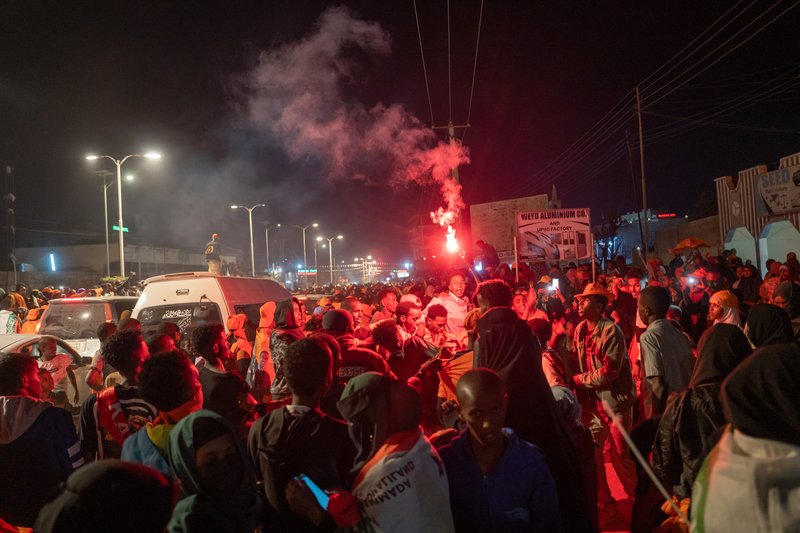
To give some background information, Somaliland has a population of around 6 million people, of which 80% are under the age of 40. Clearly visible in public spaces are crowds of young people, who celebrate their nations democracy and express their desire to become a sovereign state. In Somaliland, citizens down to the age of 15 can legally vote for the upcoming national elections and in 2024, 1.227.048 voters have been registered.
The political parties Kulmiye, Waddani, Ucid and Kaah are four of the seven parties, each running for presidency with their own candidate. Kulmiye has been governing the country for the past terms and shortly before the elections, the polls indicated a close race between the Conservative Party Kulmiye and the liberal opposition party Waddani. Despite political differences, the desire for international recognition is at the top of both parties agendas.
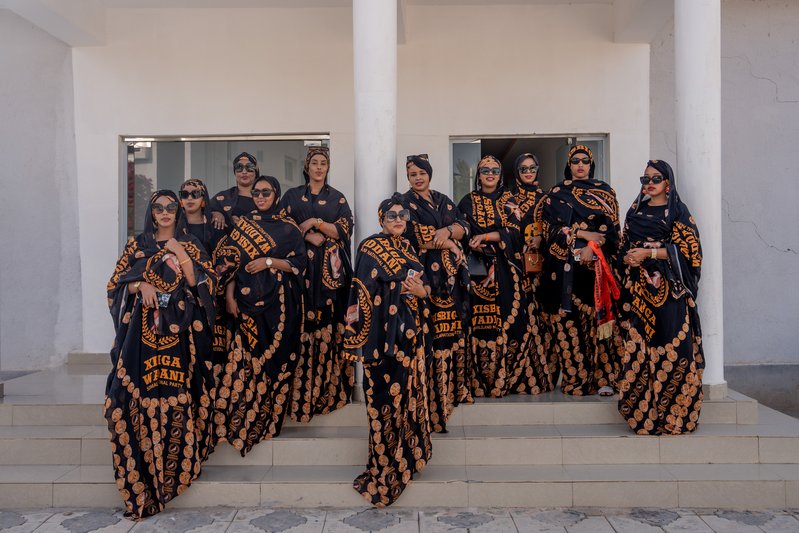
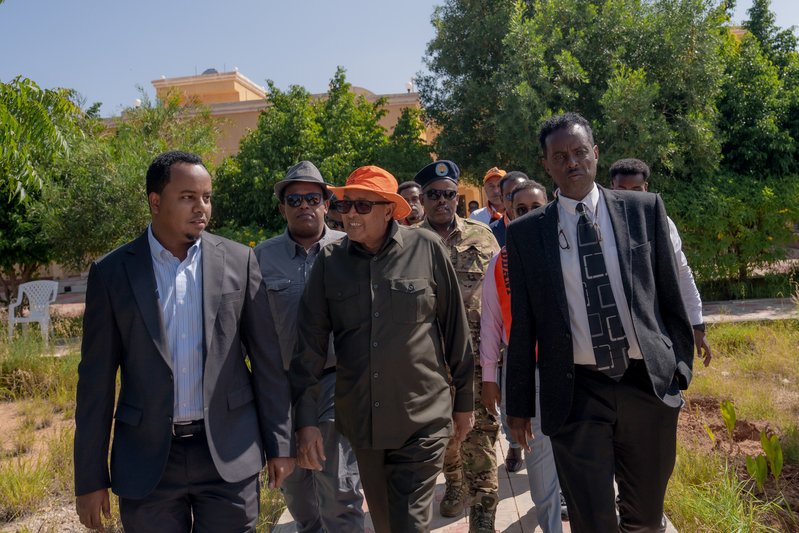
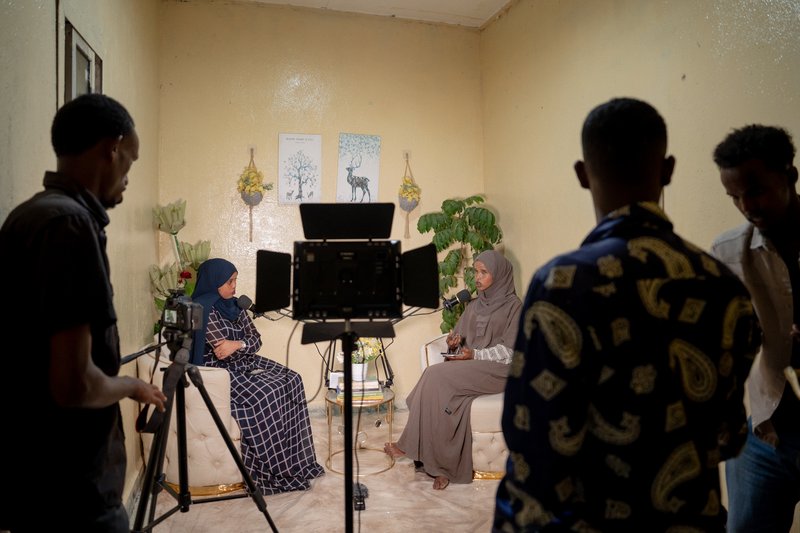
In the days leading up to the election, the journalist and I had exclusive access to follow the orange opposition party Waddani and their presidential candidate Abdirahman Cirro
Untitled
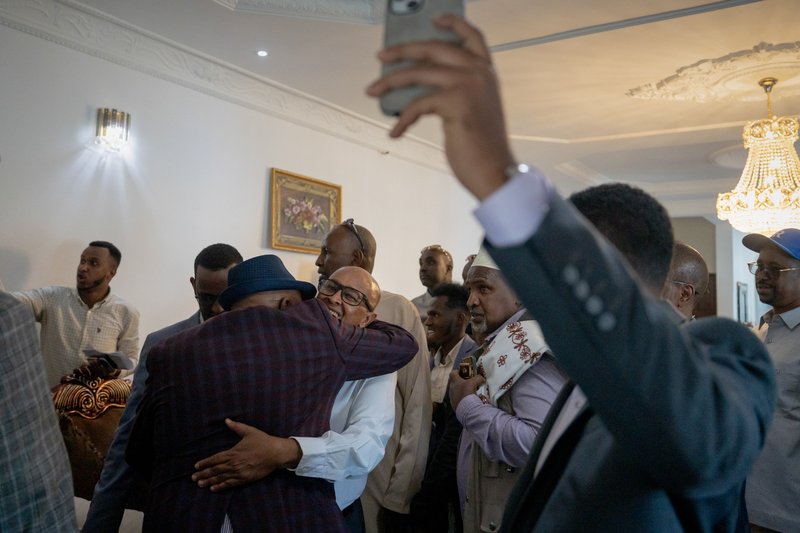
Somaliland’s president elect Abdirahman “Cirro" (middle), celebrates the election results with close staff and future ministers at his home in Hargeisa. Somaliland’s National Electoral Commission announces the official election results six days after election day: Abdirahman Mohamed Abdullahi "Cirro" wins with 64%. Former president Muse Bihi Abdi receives 35%, while only 0.7% go to the third candidate from the Ucid party.